Whisk(e)y
There is no doubt that this is one of the most versatile and complex spirit categories. Simply put, it is a grain spirit (the "water of life" in Celtic culture) aged in wooden barrels. The invention and development of whisky can be credited to the Scots and the Irish, who boast at least half a millennium of whisky-making history.
Whisky is always made from grain, which is first turned into an alcoholic beverage similar to beer, then distilled and aged in barrels for several years.
Single Malt
A characteristic category of Scotch whiskies, where "single" refers to the fact that it is produced in a single distillery, while "malt" means it is made exclusively from malted barley, using double pot still distillation. These whiskies are generally very distinctive, often carrying smoky or fruity flavors. The number on the label indicates the minimum aging time, meaning that if a bottle shows the number 12, it contains only spirits that are at least 12 years old. It's important to note that the aging process only happens in wooden barrels, and after bottling, the spirit no longer matures.
Blended Scotch
Here, "Scotch" refers to Scotch whisky, and "blended" indicates a mixture of different whiskies. There are two main reasons for blending whiskies. First, by combining various malt and grain whiskies, the dominant, sharp notes are smoothed out, creating a complex yet easily enjoyable spirit. Second, blending ensures consistent quality, which is crucial as the world’s biggest brands fall into this category, like Johnnie Walker. In this group, the minimum aging time is three years in wooden barrels; for example, Johnnie Red is aged for three years, while Johnnie Black is aged for 12 years, as noted on the bottle. This means every drop of Johnnie Black is at least 12 years old.
Irish Whiskey
Lighter than the whiskies mentioned above, Irish whiskey enjoys a strong fan base, and it can be said that it is quite similar to its Scottish cousin in terms of production. However, the key difference is that the Irish don’t use peat during the malting process, so Irish whiskey never has a smoky characteristic. Additionally, the Irish distill their whiskey three times (unlike the Scots who distill it twice), resulting in a lighter and more neutral flavor.
Bourbon
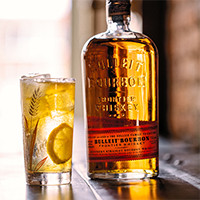
The most popular category of American whiskey, Bourbon has been made since the 18th century, primarily in Kentucky. Its main ingredient is corn (at least 51%), and after distillation, the raw spirit must be aged for at least four years in freshly charred barrels—unless the age is stated on the label. The freshly charred barrels give Bourbon its sweet, vanilla-like aroma and flavor, often reminiscent of banana and coconut. This smooth, sweet character has garnered many fans for this American category.
Rye
Rye whiskey is similar to Bourbon, but in this case, rye is the dominant ingredient. Few know that rye whiskey was once America’s whiskey. Almost all brands in the U.S. now also produce rye variants.
Tennessee Whiskey
A quasi-Bourbon made in Tennessee, this whiskey is filtered through a layer of charcoal made from maple wood. Importantly, this charcoal doesn’t impart a smoky flavor; instead, it gives the spirit a softer character.
Canadian Whisky
Canadian whisky is typically made from rye and wheat, and it has a very mild, almost "neutral" style. These whiskies are mostly consumed in cocktails worldwide.
Japanese Whisky
Surprisingly, the "Land of the Rising Sun" boasts nearly 100 years of whisky-making culture. Based on Scotch whisky technology, the Japanese approach incorporates perfectionism, maximalism, and a sacred dedication to the craft. It’s no surprise that Japanese whiskies have been awarded some of the most prestigious international accolades in recent years.